How AI-Native Brands Are Rebuilding AI Brand Trust and Demand in 2026
In 2026, building a memorable product is no longer enough. Brands are now showing up in AI answers, AI shopping flows, recommendation engines, and automated customer journeys before a buyer ever lands on a homepage. That shift is changing the rules of growth. The brands that win are not simply the ones using artificial intelligence fastest. They are the ones using it in a way that feels useful, transparent, and genuinely human.
This is why AI brand trust has become such a critical business issue. When customers cannot tell whether they are reading a human recommendation, an automated response, or a machine-generated product pitch, trust becomes fragile. Once that trust slips, demand becomes expensive to rebuild. But when a brand uses AI to improve speed, relevance, and service without hiding the human layer, it creates a more durable relationship and a stronger path to growth.
Why AI Brand Trust Is Becoming a Growth Layer
The rise of AI search, AI shopping assistants, and automated discovery has changed the first impression of a brand. In many cases, a customer now meets the summary before the source. That means reputation is being shaped earlier in the journey and often outside channels a company fully controls. If the brand feels inconsistent, overly automated, or unclear about how it uses data, the customer may move on without ever engaging directly.
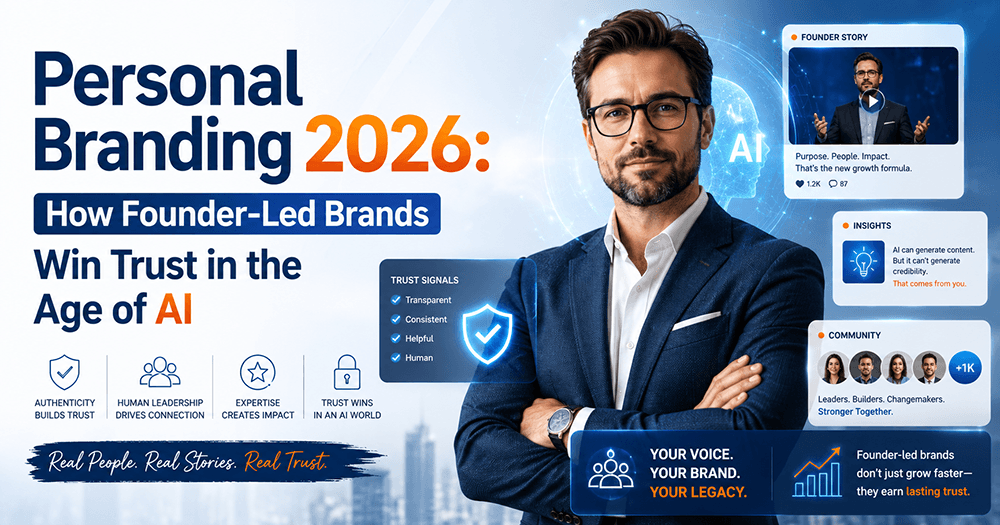
For AI-native companies, this creates a major responsibility. They must design trust into the product, the content, and the buying experience from day one. That includes clear language, visible proof, honest expectations, and a simple way for customers to reach a real person when the situation becomes sensitive, expensive, or emotionally important. Trust is no longer a supporting message after the sale. It is part of the product experience itself.
Where AI Brand Trust Breaks Down First
Most trust problems do not start with a dramatic scandal. They start with small moments of friction. A chatbot pretends to sound human without disclosure. A recommendation feels invasive because the customer does not understand how the brand got the data. A support flow loops users through automation when they clearly need help from a real specialist. Or a brand publishes large amounts of AI-generated content that sounds polished but says very little.
Those moments create a pattern. Customers begin to feel that convenience matters more to the brand than clarity, or that efficiency has replaced empathy. Once that perception forms, even good products can start to feel generic. That is why AI brand trust depends on restraint as much as innovation. The smartest teams do not automate every interaction possible. They automate what should be fast, and they protect what should still feel human.
First-Party Relationships Matter More Than Rented Reach
One of the biggest strategic shifts in 2026 is the return of direct relationships. As AI platforms increasingly mediate how people research and compare products, brands need stronger first-party signals such as email communities, loyalty programs, customer education hubs, product usage insights, and owned audience channels. These are not just marketing assets. They are trust assets.
Community plays an equally important role. People still believe people more than polished campaigns. Reviews, thoughtful creator partnerships, user stories, expert commentary, forum discussions, and visible customer feedback all help reduce uncertainty. When a brand is willing to show real responses, including respectful criticism, it looks more credible than one that presents only perfect messaging. In an AI-heavy market, real context becomes a competitive advantage.
Brands do not rebuild demand by sounding more automated. They rebuild it by making automation feel more accountable, more relevant, and easier to verify.
How to Operationalize AI Brand Trust Across the Journey
Strong AI brand trust usually comes from a few disciplined habits. First, disclose AI clearly whenever it materially affects the customer experience. Second, offer a human handoff in support, service, and high-stakes decisions. Third, use first-party data carefully and explain the value exchange in plain language. Fourth, create content that is genuinely helpful rather than mass-produced for volume alone. Finally, measure trust through retention, repeat purchase, branded search, review quality, and customer sentiment, not just clicks.
AI brand trust also improves when teams align product, marketing, and support around the same standards. If the product promises transparency but the ads overstate capability, trust erodes. If the support team handles sensitive issues well but the onboarding flow feels manipulative, demand weakens. Consistency is what makes a brand feel dependable, and dependability is what turns a useful tool into a preferred one.
Demand Returns When Trust Feels Practical
Customers do not reward brands for using AI simply because it is advanced. They reward brands when AI makes the experience better in ways they can feel. Faster answers. Better recommendations. Less wasted time. Smarter discovery. More relevant communication. Clearer control. These are practical benefits, and practical benefits are what turn trust into demand.
The brands with the best momentum in 2026 understand that automation should not erase identity. It should sharpen it. When a company combines AI efficiency with human judgment, community proof, and honest communication, it earns something more valuable than a short burst of attention. It earns loyalty. In that environment, AI brand trust becomes more than a branding metric. It becomes a real growth engine.
Related YouTube Video
Outbound resource: Edelman 2026 Brand Growth in an Insular World
Whether you need a professional website, branding, marketing campaigns, business strategy, or live skill training, KritanSkillX is ready to help you move forward.