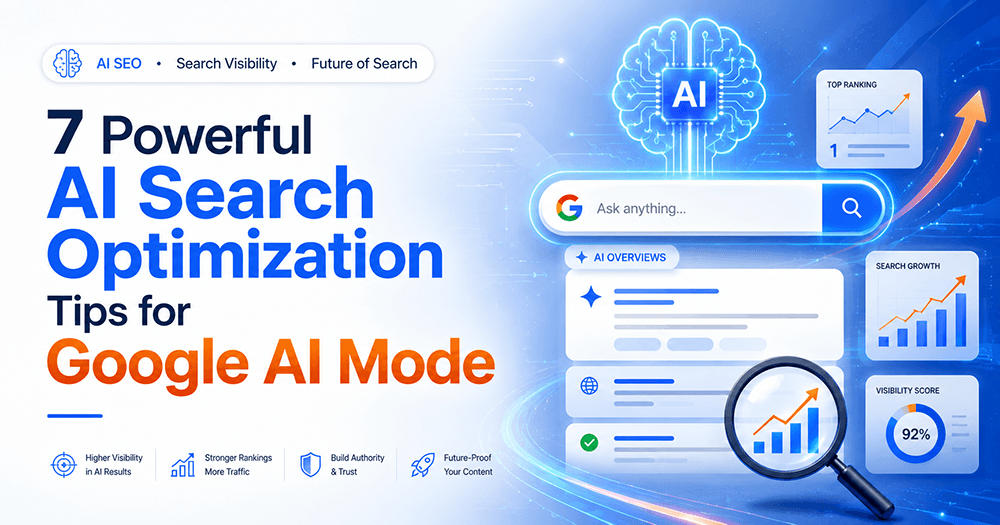
AI Search Optimization: Google AI Mode and the Future of SEO
Search is changing faster than ever. People no longer use Google only to see a list of blue links. Now, they ask longer questions, compare options, and expect direct answers from AI-powered search features. This is why AI Search Optimization has become an important topic for bloggers, business owners, digital marketers, and website creators.
Google AI Mode and AI Overviews are changing how users discover information. Instead of focusing only on traditional ranking positions, website owners now need to create content that is helpful, trustworthy, well-structured, and easy for search systems to understand. The goal is not to trick AI search. The goal is to become a useful source that deserves visibility.
Why AI Search Optimization Matters in Google AI Mode
Traditional SEO is still important, but search behavior is becoming more conversational. Users ask questions like “best AI tools for small business,” “how to make money with AI,” or “which website builder is best for beginners.” AI-powered search tries to understand the complete meaning behind these questions and provide helpful summaries with useful sources.
For website owners, AI Search Optimization means creating content that answers real user questions clearly. Your content should explain the topic, cover related subtopics, include practical examples, and provide trustworthy information. Thin content, keyword stuffing, and copied AI-generated text are less useful in this new search environment.
AI Search Optimization for Better Content Visibility
To improve visibility in AI-powered search, your content must be easy to understand. Use clear headings, short paragraphs, relevant examples, and direct answers. When a user searches for a topic, Google needs to understand what your page is about and whether it provides original value.
A strong article should answer the main question first, then explain supporting details. For example, if your blog is about AI SEO, do not only define the term. Explain how it works, why it matters, what mistakes to avoid, and how a beginner can apply it.
Key AI Search Optimization Elements for Website Owners
A good AI-ready page includes helpful structure and user-focused content. Your title should clearly describe the topic. Your introduction should explain what the reader will learn. Your headings should divide the article into logical sections. Your conclusion should summarize the value and guide the reader to the next step.
- Write clear answers for real search questions.
- Use simple headings and organized sections.
- Add examples, steps, comparisons, and useful insights.
- Keep your website technically clean and indexable.
- Avoid publishing low-value AI-generated content.
How to Optimize Content for Google AI Mode
Google AI Mode is designed to help users explore topics in a deeper way. That means content creators should focus on depth, clarity, and usefulness. A blog should not only target one keyword. It should cover the complete search intent behind that keyword.
For example, if your target topic is AI SEO, users may also want to know about AI Overviews, Google AI Mode, content structure, schema, topical authority, and trust signals. Covering these related points makes your page more helpful for both users and search engines.
Build Trust With Original and Helpful Content
Trust is very important in AI-powered search. Add original explanations, personal experience, real examples, case studies, screenshots, expert tips, or updated data whenever possible. If your content simply repeats what many other websites already say, it becomes difficult to stand out.
You should also update your old articles regularly. AI search systems and users both prefer fresh, accurate, and useful information, especially in fast-changing topics like artificial intelligence, digital marketing, SEO tools, and online business.
Common Mistakes in AI SEO
One common mistake is publishing a large number of AI-written articles without editing or adding real value. Another mistake is ignoring technical SEO. If your pages are not indexed, load slowly, or have poor mobile experience, they may struggle to perform well.
Website owners should also avoid keyword stuffing. Using the same keyword too many times can make content look unnatural. Instead, use related terms like AI SEO, AI-powered search, Google AI Mode, search visibility, helpful content, and user intent.
Final Thoughts on AI Search Optimization
AI Search Optimization is not a replacement for SEO. It is the next stage of SEO where user intent, content quality, structure, trust, and technical performance become even more important. If your website provides original, helpful, and well-organized content, it has a better chance to perform in both traditional search results and AI-powered search experiences.
Start by improving your existing blogs, answering real user questions, adding useful examples, and keeping your website technically strong. The future of search belongs to websites that help users clearly, quickly, and honestly.
Outbound Link: Learn more about Google AI features and your website
Whether you need a professional website, branding, marketing campaigns, business strategy, or live skill training, KritanSkillX is ready to help you move forward.