AI Literacy Is the New Excel: The Most Valuable Skills to Learn Online in 2026
A few years ago, Excel was one of the most important workplace skills. People who knew how to organise data, use formulas, build reports, and save time had a clear advantage. In 2026, the same shift is happening with artificial intelligence. AI literacy is becoming a practical skill for students, freelancers, marketers, business owners, and professionals who want to stay relevant.
But learning AI does not mean memorising technical terms or only writing prompts. The real value comes from knowing how to use AI tools responsibly, automate repetitive work, improve decision-making, and build better workflows. If you want to learn AI online, the goal should not be hype. The goal should be useful skills that make your work faster, smarter, and more valuable.
Why AI Literacy Matters for Future-Proof Work
AI literacy helps you understand what AI can do, what it cannot do, and how to use it without blindly depending on it. Many people can copy and paste prompts, but fewer people can turn AI into a repeatable system for real work. That difference is where career growth and business opportunity begin.
In online education, the most valuable courses are now moving from basic prompting to practical skill stacks. These include workflow planning, automation, content production, data analysis, AI research, digital communication, and tool integration. The more clearly you connect AI with real outcomes, the more useful your skill becomes.
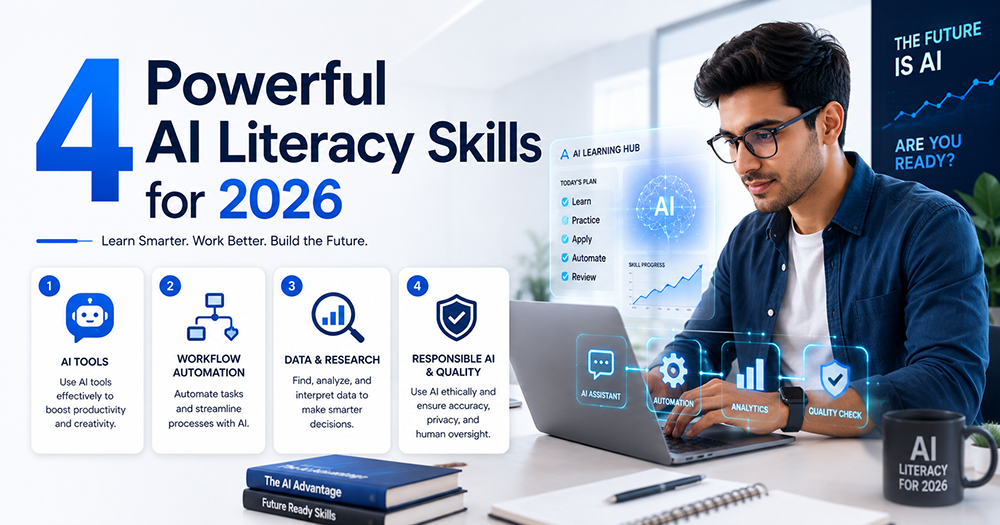
4 Powerful Skills to Learn Online in 2026
AI Literacy Topic 1: Understanding AI Tools and Use Cases
The first skill is understanding how different AI tools work in daily tasks. Chatbots, image generators, video tools, research assistants, coding assistants, and automation platforms all serve different purposes. A beginner should learn when to use each tool and when not to use it.
Strong AI literacy means you can select the right tool for the right job. For example, a blogger may use AI for outlines, research summaries, and content improvement. A freelancer may use it for proposals and client communication. A business owner may use it for customer replies, lead follow-ups, and reports.
AI Literacy Topic 2: Moving From Prompting to Workflow Automation
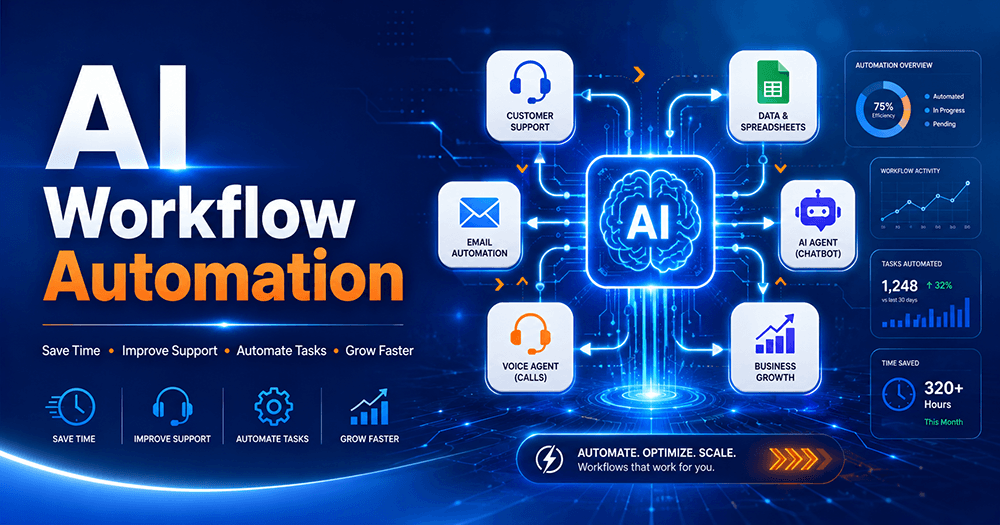
Prompting is useful, but it is not enough. The bigger opportunity is learning how to build workflows. A workflow is a step-by-step system where AI helps complete a task from start to finish. This may include collecting information, cleaning data, writing a draft, checking quality, sending updates, and saving the final output.
The next level of AI literacy is knowing how to connect tools like forms, spreadsheets, email platforms, CRMs, chatbots, and automation apps. This is why workflow automation skills are growing fast. Businesses do not only want prompts; they want systems that save time every day.
Topic 3: Data, Research, and Decision-Making Skills
AI can produce answers quickly, but professionals still need to verify information, compare sources, and make smart decisions. This is why data and research skills are important. You should learn how to ask better questions, check facts, summarise reports, compare options, and convert information into action points.
These skills are useful for SEO, digital marketing, content strategy, sales planning, business research, and online education. A person who can use AI to study trends and then create a clear plan becomes more valuable than someone who only generates generic text.
AI Literacy Topic 4: Ethics, Quality Control, and Portfolio Building
AI skills are not complete without quality control. You must learn how to edit outputs, avoid fake claims, protect private data, and use AI responsibly. This is especially important for students, creators, freelancers, and businesses publishing content online.
To prove your skills, build a small portfolio. Create sample AI workflows, blog outlines, social media calendars, chatbot flows, automation demos, or research reports. A practical portfolio shows that your AI literacy is not just theory. It shows that you can apply AI to real work.
How to Start Learning AI Online
Start with one clear goal. If you are a student, learn AI for research, presentation, and productivity. If you are a freelancer, learn AI for proposals, service delivery, and client management. If you are a business owner, learn AI for marketing, customer support, and automation.
- Learn basic AI concepts and common tools.
- Practice prompt writing, but do not stop there.
- Create simple workflows for repeated tasks.
- Study data checking, editing, and quality control.
- Build a portfolio with real examples.
In 2026, AI literacy will be most powerful when it is combined with communication, creativity, problem-solving, and business thinking. Tools will keep changing, but these core abilities will stay valuable.
Final Thoughts
The future of work is not only about who can use AI first. It is about who can use AI well. The people who understand tools, workflows, data, ethics, and real-world application will have a stronger advantage in jobs, freelancing, online business, and digital education.
If Excel helped professionals organise work in the past, AI can help them improve speed, creativity, and decision-making today. The smartest move is to start learning now, practice with real projects, and build skills that remain useful even as tools evolve.
Watch Related Video
Watch a related video about AI skills, workflow automation, and future-proof online learning. Replace the video ID with your own YouTube video for better branding.
Whether you need a professional website, branding, marketing campaigns, business strategy, or live skill training, KritanSkillX is ready to help you move forward.